
The Evidence-Based Platform for Checking Medications
We verify medications against real scientific studies from PubMed and Cochrane Library. No marketing — only evidence-based facts.
Compare two medications
Enter two drug names and compare their evidence ratings side by side. See the difference in mechanism, best use, and key risks — all at a glance.
European analogs
Find brand names of the same active ingredient across 22 European countries — including prescription status in each country.
Drug interactions
Add two or more medications and check for known dangerous interactions between them — with an explanation and risk level for each pair.
Treatment by diagnosis
Enter a diagnosis and see which drug classes have real, evidence-based support for treating it — not a specific brand recommendation.
Take a photo. Check what you're taking.
One photo of your medicine cabinet — and you'll instantly know which medications are backed by real evidence, and which aren't.
Photograph your cabinet →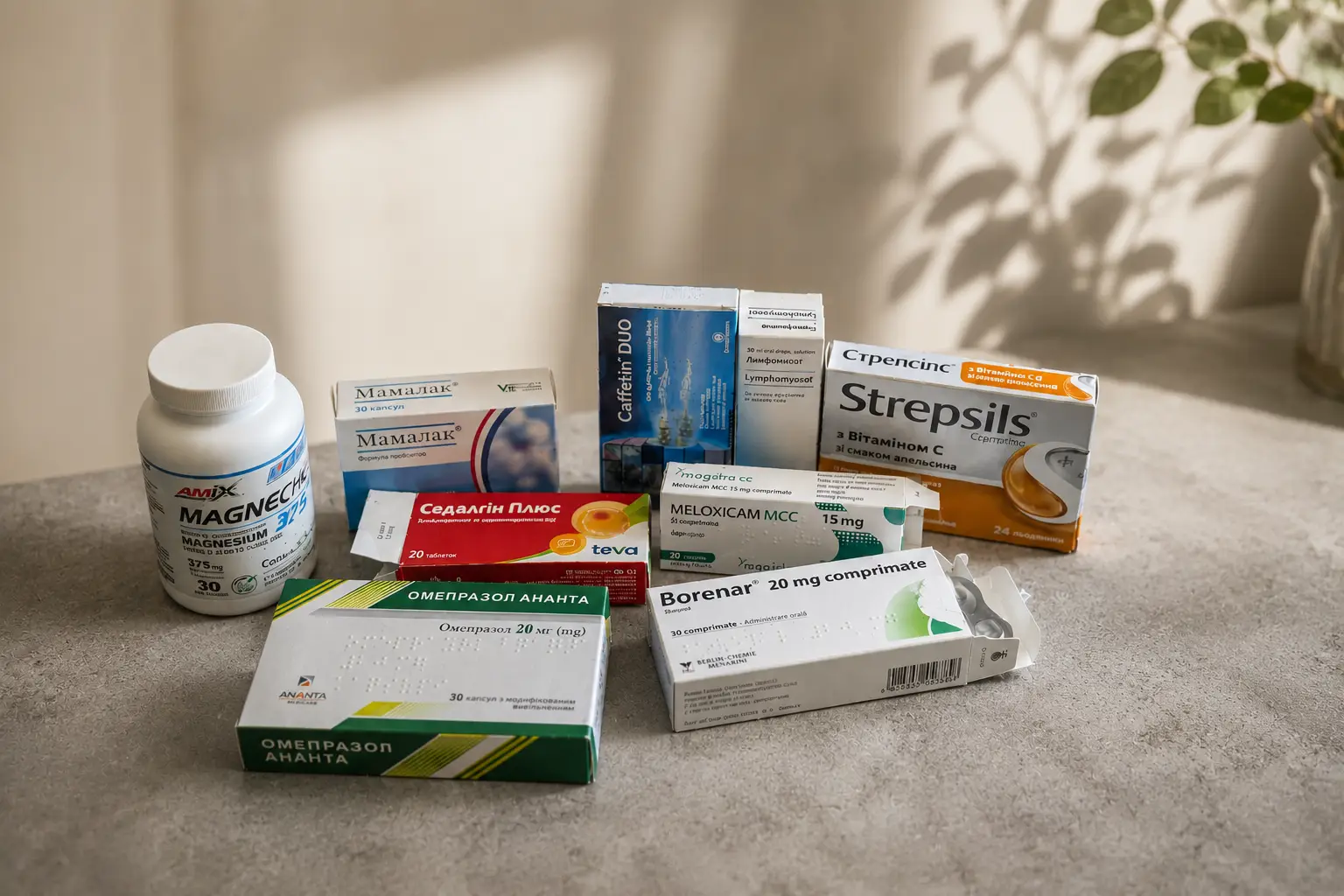
What is evidence-based medicine?
Evidence-Based Medicine (EBM) is an approach where medical decisions are based on the best available scientific evidence — not on traditions, marketing, or a manufacturer's authority. Not all medications are equally effective. Some are supported by thousands of high-quality studies, while others rely mostly on marketing claims. Our goal is to help you understand the difference.
How does it work?
Enter the name
Brand name or international nonproprietary name (INN) of the medication
We analyze the research
We search PubMed and Cochrane Library for real clinical trials and systematic reviews
Get the result
Receive an evidence rating (A/B/C/D) and a plain-language summary with links to the original sources
How is the rating calculated?
The evidence rating is based on the quantity, quality, and consistency of scientific research available for a medication.
High level of evidence
Multiple randomized controlled trials and meta-analyses confirm effectiveness.
Moderate level of evidence
There are quality studies available, but the amount of evidence or consistency of results is limited.
Low level of evidence
Studies exist, but they have methodological limitations or conflicting results.
Insufficient evidence
Scientific evidence is lacking or does not support the claimed effectiveness.
Evidence Files
Recently published
Genetics
What Your Genes Really Decide, and What They Don't
Same genes, different lives: Pima Indians in Arizona have type 2 diabetes at a rate of 38%, while their genetic relatives in the mountains of Mexico have it at 6.9%. Height in men is 87–93% heritable, yet South Korean women grew 20 centimetres taller in a single century. This explainer is about where genes really decide, where they only shift the odds, and why “it runs in the family” almost never means “nothing can be done”.
CBD Oil
Proven for Rare Epilepsy, at 700 Times the Dose EU Regulators Call Safe in Food
In the trials that made CBD a licensed medicine, patients with severe childhood-onset epilepsy took **20 mg per kilogram of body weight** every day. In February 2026, the EU's food safety authority set a provisional safe intake for CBD food supplements of **0.0275 mg per kilogram**, about 2 mg a day for an adult. The oils and gummies sold for calm, sleep and pain are backed by neither: their evidence is far thinner than the epilepsy data they borrow their reputation from.
Vaccination
What the Evidence Actually Shows — and What Doubt Costs
Over fifty years, vaccination has prevented 154 million deaths — most of them babies. The supposed link between the measles vaccine and autism has been tested in more than a million children and not found. And in 2025–2026, the United States recorded more than 3,500 measles cases, enough to put its elimination status, held since 2000, under formal review. This explainer covers what is known for certain, which vaccine risks are real, and why doubt here costs more than it seems.
Important to know
Disclaimer
Trick or Treatment is an informational platform. We do not provide medical consultations and do not replace the advice of a qualified healthcare professional.
The information presented should not be used for self-medication, or for changing or discontinuing a prescribed treatment without first consulting a doctor.
Our ratings are based on publicly available scientific evidence at the time of the search. They may change as new research becomes available. We do not evaluate the safety of medications, only the quantity and quality of evidence of their effectiveness.
Results are cached for up to 30 days. The grade may differ from future searches if new studies are published in the interim.