EN|UA
Trick or Treatment
ExplainerEvidence Files

Vaccination: What the Evidence Actually Shows — and What Doubt Costs

Over fifty years, vaccination has prevented 154 million deaths — most of them babies. The supposed link between the measles vaccine and autism has been tested in more than a million children and not found. And in 2025–2026, the United States recorded more than 3,500 measles cases, enough to put its elimination status, held since 2000, under formal review. This explainer covers what is known for certain, which vaccine risks are real, and why doubt here costs more than it seems.

29 min read39 sources

Three numbers to start with

Each comes from a separate study, linked at the end. Together they answer the three questions that matter: does it work, is it safe, and what happens when people stop.

154M

deaths prevented by vaccination since 1974. 101 million of them were babies under one

Shattock et al., The Lancet, 2024

657,461

children in the Danish study that looked for a link between the MMR vaccine and autism. It found none — even in children whose siblings had autism

Hviid et al., Annals of Internal Medicine, 2019

3,500+

measles cases in the US in 2025–2026 — enough to place the country's measles elimination status, declared in 2000, under formal review

Chen and Bento, Nature Medicine, 2026

Why the question keeps coming up

Vaccines are victims of their own success. Earlier generations saw children paralysed by polio and babies die of whooping cough. We don't — precisely because the vaccines worked. What we do see is the jab, the fever that evening, and stories on social media. The risk of the disease has become abstract and the risk of the vaccine concrete, when in reality it is the other way round.

Hesitancy is not a fringe position. In a survey of 5,736 parents across eighteen European countries, 56% described themselves as not at all hesitant and another 24% as somewhat hesitant; confidence was lowest in Bulgaria and Poland, and highest hesitancy was found among parents who consulted homeopaths. In the US, exemptions among kindergartners rose to 3.3% in the 2023–24 school year, and 14 jurisdictions reported that more than 5% of kindergartners were exempt from at least one vaccine.

So if you are reading this asking “should we or shouldn't we?”, you are neither unusual nor “anti-vax”. You want to understand. What follows is not a campaign but the studies: what they showed, with what limitations, and where the edge of current knowledge lies.

How a vaccine works, in two minutes

The immune system learns from experience. The first time a pathogen gets in, it needs days to recognise it and produce the antibodies and cells that will destroy it. In that time the disease has room to develop — sometimes severely, sometimes fatally. After recovery, a memory remains: next time the response kicks in within hours, and most people don't even notice they were infected.

A vaccine provides that memory without the disease. It shows the immune system a “wanted poster” of the pathogen: a weakened or inactivated virus, a single protein from its surface, a neutralised toxin, or — in mRNA vaccines — instructions for the body's own cells to briefly make one viral protein. The immune system reacts as if to a real threat — hence the fever, the sore arm, the tiredness — and remembers.

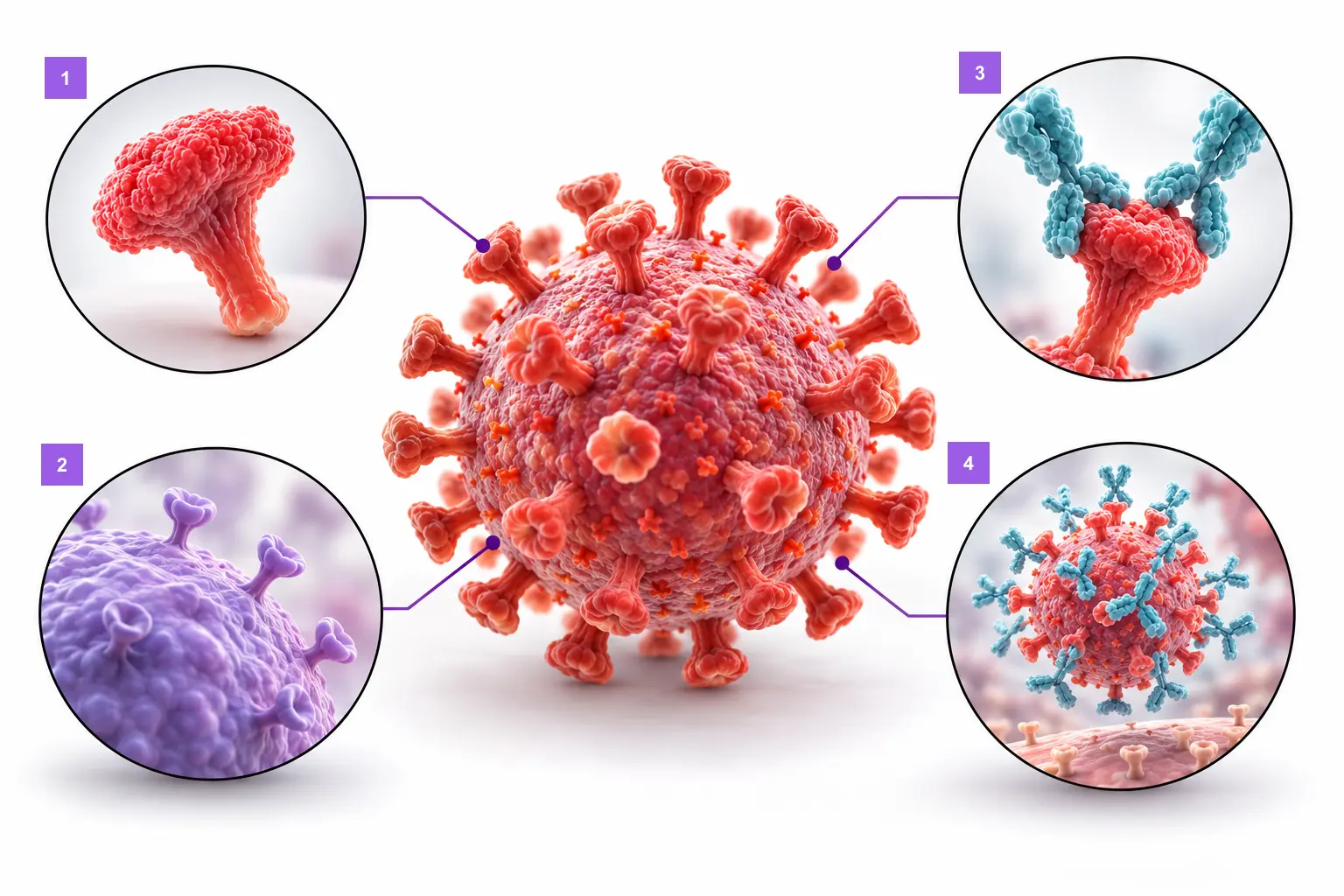
Diagram of how a vaccine works: a virus with spike proteins in the centre, surrounded by four close-ups — a single spike protein, an immune cell with receptors that fit it, an antibody gripping the spike, and a virus coated in antibodies that cannot attach to a cell.
  1. 1

    The vaccine shows a “wanted poster”. The body sees not the virus itself but a recognisable part of it — for example, a spike from its surface.

  2. 2

    The body remembers. Immune cells study the shape of that spike and keep a memory of it.

  3. 3

    The real virus arrives. Antibodies immediately recognise the familiar spike and latch onto it.

  4. 4

    The virus is stopped. Coated in antibodies, it cannot attach to the body's cells.

Steps 1–2 happen during vaccination, 3–4 when the real virus arrives. The illustration is schematic.

Two consequences follow. First, a vaccine does not work instantly — protection builds over weeks. Second, the closer the “wanted poster” is to the real pathogen and the more stable the pathogen, the better the protection. Measles changes little, and two doses of vaccine protect against it by 96%. Flu changes every year, so the vaccine has to be updated and protects more modestly. More on that below.

Europe and the US: elimination is not permanent

The myth that vaccines cause autism was born in Europe — in a 1998 paper in The Lancet by the British doctor Andrew Wakefield — and Europe still lives with the consequences. In Romania, an EU member state, measles vaccination coverage was above 97% before 2010; by 2022 it had fallen to 83.4% for the first dose and 71.4% for the second. In 2023 the WHO European Region recorded 60,860 measles cases and 13 deaths, 95% of them in six countries including Romania.

The US declared measles eliminated in 2000. A 2026 analysis in Nature Medicine found that average susceptibility to measles roughly doubled after the pandemic, from about 5% to 10%, and that at the level of individual schools transmission had crossed the epidemic threshold by 2022–2023 — a shift invisible in county-level averages. In 2025–2026, more than 3,500 cases put the country's elimination status under formal review. Nationally, kindergarten MMR coverage stood at 92.7% in 2023–24; four years earlier, coverage across all required vaccines had been about 95%.

One more European lesson — about coincidence. In 2008, during a measles vaccination campaign in Ukraine, a person died. The death was temporally but not causally related to the vaccine. The mishandled response collapsed public trust: polio vaccine coverage fell from 91% to 15% by 2015, when two children in western Ukraine were paralysed. Timing is not causation. Every day, people fall ill for reasons that have nothing to do with medicine; when it happens the day after a vaccine, the mind joins the dots. Only a comparison with the unvaccinated can tell coincidence from cause — and that is what the rest of this article is about.

Romania, an EU country: how measles vaccination coverage slipped

Share of children vaccinated against measles. Measles needs coverage of about 93–95% to stop spreading.

Before 2010 (both doses)

97.0%

2022, first dose

83.4%

2022, second dose

71.4%

Stanescu et al., Vaccines, 2024. Before 2010 coverage was above 97%; the authors cite missed GP visits, population movement, vaccine hesitancy, fewer GPs and supply disruptions. In 2017 Romania had the highest measles incidence in Europe — 46.1 cases per 100,000.

What happens when coverage falls: five natural experiments

The most convincing argument for vaccines comes not from laboratories but from places that stopped vaccinating for a while. Here is what happened to them.

In the US, most measles cases after elimination were people who could have been vaccinated

Phadke et al., JAMA, 2016

How it was tested
A review of all published reports of US measles outbreaks after elimination in 2000, and of pertussis outbreaks, looking at the vaccination status of the people who got sick.
What came out
Of 1,416 measles cases, 56.8% had no history of measles vaccination. Among cases who were eligible for vaccination but unvaccinated, 70.6% had non-medical exemptions — religious or philosophical rather than medical.
What it means
Vaccine refusal raised the risk of measles not only for the people who refused, but also for fully vaccinated people around them. The limit: this is a review of published reports, which may over-represent well-documented outbreaks.
Read the study →

Measles in Europe: coverage mattered, migrants and tourists did not

Leong and Wilder-Smith, Journal of Epidemiology and Global Health, 2019

How it was tested
A comparison of 2017 measles incidence across European countries with two-dose vaccination coverage, GDP, numbers of migrants and tourist arrivals.
What came out
Incidence was highest in Romania (46.1 per 100,000), Ukraine (10.8) and Greece (8.7) — all with second-dose coverage below 84%. Coverage was the only significant factor: each one-point rise cut incidence by 18%. Migrants and tourists were not drivers.
What it means
Countries with high coverage had no resurgence however many people arrived. The limit: this compares countries, not individuals, so it shows an association at the level of whole populations.
Read the study →

Samoa, 2019: 83 deaths in four months

Casey et al., Western Pacific Surveillance and Response Journal, 2023

How it was tested
A description of the measles outbreak in Samoa and the response to it.
What came out
First-dose measles vaccine coverage was 40%, second-dose 28%. Between 30 September 2019 and 13 January 2020, 1,867 patients were treated in hospital and 83 people died. The government declared a state of emergency and asked for international help.
What it means
This is what measles looks like in a society without collective protection — not a textbook story, but 2019. The limit: Samoa's health system is small, so mortality was higher than it would be with access to intensive care.
Read the study →

Whooping cough: countries that turned against the vaccine had 10 to 100 times more cases

Gangarosa et al., The Lancet, 1998

How it was tested
A comparison of pertussis incidence in countries that kept vaccination coverage high (Hungary, Poland, East Germany, the US) with countries where anti-vaccine movements disrupted it (Sweden, Japan, the UK, Russia, Ireland, Italy, West Germany, Australia).
What came out
Where high coverage was maintained, pertussis was 10 to 100 times less common. Comparisons of neighbouring countries with high and low coverage showed the same.
What it means
One of the cleanest natural experiments in medicine: similar countries, the same disease, the only difference being the decision to vaccinate. The limit: the data are old, and the vaccine in question was the older whole-cell type; modern pertussis vaccines are different.
Read the study →

How many lives vaccination saved in 50 years

Shattock et al., The Lancet, 2024

How it was tested
Modelling of the impact of vaccination against 14 pathogens since 1974, when WHO launched its Expanded Programme on Immunization, compared with a hypothetical world without vaccines.
What came out
154 million deaths prevented, 146 million in children under five and 101 million in babies under one. Vaccination accounts for 40% of the global fall in infant mortality over the period. In 2024, a child under 10 is 40% more likely to reach their next birthday than in a world without vaccines.
What it means
The best answer to “what have vaccines ever done?”. The limit: this is a model, not an observation — it compares the real world with an imagined one, and the result depends on assumptions. The work was funded by WHO, and some of the authors work there.
Read the study →

What declining coverage would cost — and what keeps it up

In both the US and Europe the debate is now about policy: school requirements, exemptions, the childhood schedule. Here is what the research says about the consequences.

If US vaccination keeps falling, measles becomes endemic again

Kiang et al., JAMA, 2025

How it was tested
A simulation of measles, rubella, polio and diphtheria across all 50 US states and Washington, DC over 25 years, under different vaccination scenarios, using state-level vaccination data from 2004–2023.
What came out
At current vaccination rates, measles re-established itself as endemic in 83% of simulations, with about 851,300 cases over 25 years. A 10% fall in MMR vaccination raised this to 11.1 million cases; a 5% rise cut it to about 5,800. If all routine childhood vaccination halved, the model projected 51.2 million measles cases and 159,200 deaths, with measles endemic within about five years.
What it means
Measles is the canary: it is the first disease to return because it is the most contagious. The limit: this is a model with assumptions about importation and contact patterns, and the authors note large variation across the US.
Read the study →

Removing non-medical exemptions raised US kindergarten vaccination by about 4 points

Bald et al., JAMA Pediatrics, 2026

How it was tested
A comparison of kindergarten vaccination in four US states that fully repealed non-medical exemptions (California among them, in 2015) with states that kept them, using CDC data from 2011 to 2023.
What came out
Within three years of repeal, exemption rates fell by 3.2 points and MMR coverage rose by 4.0 points relative to other states, with only a 0.4-point increase in medical exemptions. Partial repeals had smaller, less lasting effects.
What it means
Policy can hold coverage up even during a period of rising hesitancy. The limit: this is an observational comparison of states, not a randomised trial, so other differences between states may play a part.
Read the study →

In Europe, mandatory vaccination worked best without non-medical exemptions

Vaz et al., Pediatrics, 2020

How it was tested
An analysis of 29 European countries comparing mandatory vaccination policies with measles and pertussis vaccine coverage and disease incidence.
What came out
Mandatory vaccination was associated with 3.71 points higher measles vaccination coverage. It was linked to lower measles incidence only in countries without non-medical exemptions (incidence rate ratio 0.14). No significant association was found for pertussis incidence.
What it means
A mandate with easy opt-outs changes little; a mandate without them is associated with much less measles. The limit: country-level data, so it cannot show what drives individual parents' decisions.
Read the study →

One sentence worth remembering

The key point

Not vaccinating is not a choice between “risk” and “safety”. It is a choice between a very small vaccine risk, measured across millions of doses, and the risk of the disease itself, which comes back every time coverage falls.

Autism: how one paper created a myth, and how it was tested on millions

The best-known fear about vaccines comes from a single 1998 paper in The Lancet. Since then it has been tested more thoroughly than almost any hypothesis in medicine.

The paper that started it was retracted, then called fraudulent

The Lancet, 2010; Godlee et al., BMJ, 2011

How it was tested
Andrew Wakefield's 1998 paper linked the measles, mumps and rubella vaccine to developmental disorders in children.
What came out
In 2010 The Lancet formally retracted the paper. In 2011 the editors of the BMJ published a verdict that went straight into the headline: Wakefield's article was fraudulent.
What it means
A retracted paper alone does not prove there is no link — it only means it cannot be relied on. What proves it is the large studies below.
Read the study →

657,461 children in Denmark: no link, even in the at-risk group

Hviid et al., Annals of Internal Medicine, 2019

How it was tested
Every child born in Denmark from 1999 to 2010, followed from age one to 2013. Vaccinated and unvaccinated children were compared, adjusting for sex, birth year, other vaccines, autism in siblings and other risk factors.
What came out
6,517 children were diagnosed with autism. The risk in vaccinated compared with unvaccinated children was 0.93 (95% CI 0.85–1.02) — not higher. No increased risk was found in children whose siblings had autism, or in any time window after vaccination.
What it means
The study directly tested the argument “it doesn't cause autism in most children, but it might in susceptible ones” — and found no such effect. The limit: the authors did not review individual medical records but relied on registry data.
Read the study →

138 studies, 23 million children: the most complete Cochrane review

Di Pietrantonj et al., Cochrane Database of Systematic Reviews, 2021

How it was tested
A systematic review of all available studies of measles, mumps, rubella and varicella vaccines in children up to 15: randomised trials, cohort studies, case-control studies and more.
What came out
One dose prevented measles by 95%, two doses by 96%. No link was found with autism (0.93; 95% CI 0.85–1.01; more than 1.19 million children in two studies), nor with encephalitis, type 1 diabetes, asthma, leukaemia or multiple sclerosis.
What it means
The review is candid about the real risks too — covered below. The limit: there is not yet enough evidence on whether protection wanes over the years, and the authors say so.
Read the study →

Aluminium and “too many vaccines at once”

The second common fear is the ingredients. Many vaccines contain aluminium salts: an adjuvant, a substance that strengthens the immune response so that less antigen is needed. Whether it does harm is a fair question, and it has been answered at scale.

A 2025 Danish study followed 1,224,176 children, taking advantage of the fact that the aluminium content of the childhood schedule changed over the years. It examined 50 chronic conditions — autoimmune, allergic, asthma, autism and ADHD. No increased risk was found for any of the 50. For neurodevelopmental disorders, risk per additional milligram of aluminium was even slightly lower (0.93). The authors are honest about the limit: a very small effect for some rare conditions cannot be statistically ruled out.

Now “too many vaccines for a small child”. A review in Pediatrics brought together evidence on this from several angles: infants can respond to vaccines, a mild cold does not stop them building protection, combination vaccines work as well as separate ones, and vaccinated children do not get more infections from other pathogens. And a surprising fact: children today receive fewer antigens from vaccines than 40 or 100 years ago, because modern vaccines are far more precise. Every day a child meets thousands of foreign proteins in food, on hands and toys. A few antigens in a syringe are a drop in that ocean.

Measles is not a mild childhood illness

Measles is one of the most contagious infections known. In a fully unprotected population, one person infects on average 12 to 18 others — though a systematic review found real estimates vary even more widely depending on the setting. That is why stopping it takes coverage of about 93–95%, well above what most other diseases need. Gaps hide inside averages: in a large Ohio primary care network, even 20 months after a measles outbreak, timely first-dose MMR coverage was 53.6%.

Nor is it a harmless rash. Even in Europe, far from the world's poorest health systems, the first half of 2018 brought more than 41,000 cases and 37 deaths across the WHO European Region — roughly one death per 1,100 cases. In low- and middle-income countries, a 2023 systematic review put 2019 mortality at 1.32% among patients up to 35 years old outside hospital and 3.03% among babies under one.

The least-known part is that measles keeps doing damage after recovery. A 2019 study in Science compared the blood of 77 unvaccinated children before and two months after measles: the virus wiped out between 11% and 73% of the “library” of antibodies they had built before — part of their protection against other infections they had already survived. This did not happen in vaccinated infants. Another paper in Science showed at population level that after measles epidemics, deaths from other infections rise for a further two to three years. “Better to catch it naturally” is not natural protection; it is a risk of losing some of what you already had.

Why measles needs coverage above 95%

Each square is a person. One measles case in a crowd with different vaccination coverage. This is a schematic, not a simulation: it shows the principle, not exact numbers.

VaccinatedUnvaccinated but protectedInfectedFirst case
40% coverage — as in Samoa in 2019

Measles is so contagious that one person infects 12 to 18 others. When many people are unvaccinated, the chain reaches almost every one of them. In Samoa, at this level of coverage, 83 people died.

96% coverage

Around the first case there are only vaccinated people, so the virus has nowhere to go. The few who cannot be vaccinated — young babies, people with weakened immune systems — are protected because the chain breaks before it reaches them. That is why measles needs coverage above 95%.

The real risks of vaccines — next to the risks of the disease

An explainer that shows only benefits is no better than an advert. The most common reactions — fever, a sore arm, tiredness — pass within a day or two and are partly driven by expectation itself: in a meta-analysis of COVID-19 vaccine trials, 35.2% of people injected with salt water reported them (more in our explainer on the placebo effect). Below are the rare serious vaccine risks on one scale with the risks of the disease. The scale is logarithmic: each step is ten times more common than the one before — otherwise the rarest risks would be an invisible sliver.

Vaccine risk — per doseDisease risk — per case

Anaphylaxis after any vaccine

1 in 763,000

1.31 cases per million doses, US. Rare but dangerous — which is why vaccines are given where emergency care is available

Low platelets (ITP) after the MMR vaccine

1 in 40,000

Cochrane review; the risk after the infection itself is higher

Myocarditis after a second dose of an mRNA COVID-19 vaccine

1 in 9,400

105.9 per million doses — the highest rate, boys aged 16–17. In 87% of those hospitalised, symptoms resolved before discharge; the comparison with myocarditis from COVID-19 itself is below

Febrile seizures after the MMR vaccine

1 in 1,150–1,700

Cochrane review. Without vaccination, such seizures occur in 2–4% of children under five, and they do not raise the later risk of epilepsy

Death from measles, WHO European Region, 2018

1 in 1,100

37 deaths among more than 41,000 cases in the first half of 2018; the majority of cases were in Ukraine

Death from measles, low- and middle-income countries

1 in 76

1.32% of patients up to 35 outside hospital, 2019

Death from measles in a baby under one, same countries

1 in 33

3.03% of infant cases

Note: vaccine risks are per dose; disease risks are per person who has already caught it. Even in Europe in 2018, measles killed roughly one patient in 1,100 — a death rate about as common as a febrile seizure after the vaccine, and hundreds of times more common than vaccine anaphylaxis. In poorer settings the gap grows by another order of magnitude.

Myocarditis: from the vaccine, or from COVID-19 itself

A comparison rarely shown. In 2022, researchers in England counted extra cases of myocarditis in the 28 days after each vaccine dose and after a positive SARS-CoV-2 test — in the same people, each acting as their own control. More than 38 million vaccinated and more than 3 million infected.

Pfizer (BNT162b2), first dose

1

AstraZeneca (ChAdOx1), first dose

2

Moderna (mRNA-1273), first dose

6

Moderna (mRNA-1273), second dose

10

COVID-19 itself (positive test)

40

Patone et al., Nature Medicine, 2022. Myocarditis after vaccination is a real risk, highest after a second Moderna dose. But after infection there were 4 to 40 times more extra cases. An important limit: the raised risk after mRNA vaccines was seen only in people under 40 — so for young men the decision genuinely deserves a conversation with a doctor rather than autopilot.

Where vaccines are modest: the honest case of flu

Not all vaccines are equally strong, and pretending otherwise costs trust. The best example is the annual flu vaccine.

According to a 2018 Cochrane review (52 trials, more than 80,000 people), in healthy adults it lowers the chance of confirmed flu from 2.3% to 0.9%. To spare one person the flu, 71 people need to be vaccinated. The effect on hospital admissions is small and uncertain, and on days off work close to zero. The authors also note that 29% of the included trials were funded by industry.

That does not make the flu vaccine useless. It gives healthy adults moderate protection. The review covered healthy people aged 16 to 65, so for older people, pregnant women and people with chronic illness the question is worth discussing with a doctor separately. What it does mean is this: “vaccines” are not one product. The measles vaccine protects 95% after one dose; the flu vaccine, far more modestly. An honest conversation about vaccination starts by not lumping them together — in praise or in criticism.

For contrast, consider whooping cough vaccination in pregnancy. When England introduced it during an outbreak in 2012, protection for babies under three months was 91% — the age group most likely to die of whooping cough, because they are too young for their own vaccines.

A vaccine that prevents cancer: HPV

Human papillomavirus (HPV) causes cervical cancer, and the vaccine against it is one of the few ways to prevent a cancer with an injection. Sweden followed 926,362 girls and women for up to 18 years.

Unvaccinated

100%

Vaccinated at 17 or older

63%

Vaccinated before 17

21%

Wu et al., BMJ, 2026. Women vaccinated before 17 had a 79% lower risk of cancer, and protection held for 13–15 years after vaccination with no sign of waning. The earlier the better: the vaccine works best before any contact with the virus. An earlier study of 1.67 million Swedish women found an even larger reduction for those vaccinated before 17 — 88%. The limit: these are observational studies, not randomised trials, although the authors adjusted for education, income and family medical history.

COVID-19: what the trials showed, and what they did not

COVID-19 vaccines are the most argued-over, so here is only what can be checked. In the randomised trial of the Pfizer vaccine in 43,548 participants, symptomatic COVID-19 was confirmed in 8 vaccinated people and 162 who received placebo — 95% efficacy. Of 10 cases of severe disease, 9 were in the placebo group.

The limits are documented too. Over six months of follow-up, efficacy gradually declined — to 91.3% on average over the period — though against severe disease it stayed at 96.7%. And there is the real risk of myocarditis in young men discussed above.

The overall effect was estimated by modelling: in the first year of vaccination across 185 countries, vaccines prevented 14.4 million deaths based on official death counts — or 19.8 million based on excess mortality. That is a model with assumptions, not a direct count, but the order of magnitude is clear.

Five myths worth letting go of

Myth

“Vaccines cause autism”

In reality

The paper that started the myth was retracted and declared fraudulent. A study of 657,461 children and a Cochrane review found no link — even in children whose siblings had autism.

Myth

“The aluminium in vaccines builds up and causes harm”

In reality

A study of 1.2 million children found no link between aluminium dose and any of 50 chronic conditions — allergies, autoimmune disease, autism or ADHD.

Myth

“Natural immunity is better than vaccine immunity”

In reality

Measles wipes out 11–73% of existing antibodies against other diseases and raises deaths from other infections for two to three years. “Natural” immunity is paid for with a disease that, even in Europe in 2018, killed about one patient in 1,100.

Myth

“These diseases were disappearing anyway”

In reality

When coverage fell, the diseases came back: whooping cough was 10 to 100 times more common where vaccination was abandoned, and US measles cases returned to more than 3,500 in 2025–2026. Hygiene and nutrition matter, but they do not explain why neighbouring countries with different coverage got sick differently.

Myth

“My child is protected because everyone else is vaccinated”

In reality

Herd immunity works only while enough people are vaccinated — for measles, above 95%. Averages hide gaps: in the US, transmission potential in some schools crossed the epidemic threshold even where county-level coverage looked fine.

When vaccination is genuinely delayed or skipped

Real contraindications exist, but they are few, and they are decided by a doctor, not a forum. The most important is a severe allergic reaction to a previous dose of the same vaccine or one of its components. Live vaccines (such as MMR) are usually not given during pregnancy or to people with severe immune deficiency. With an acute illness and high fever, vaccination is often postponed until recovery — but a mild cold, according to the review in Pediatrics, does not stop a child building protection.

If a previous vaccine caused seizures or a strong reaction, or if a child has a chronic illness, that is not a reason to refuse — it is a reason to talk to a doctor about timing and setting. That is exactly what paediatricians and family doctors are for, and they are a better guide than anonymous stories online. In the European parent survey, parents who saw paediatricians were less hesitant than those who saw general practitioners, and those who consulted homeopaths were the most hesitant of all.

230 years: from the first vaccine to today

The history of vaccines is not only a list of victories. It includes fear, mistakes, fraud — and the price of doubt.

  1. 1796

    The first vaccination

    English physician Edward Jenner inoculates a boy with material from cowpox, and the boy does not catch smallpox. The word “vaccine” comes from the Latin vacca, cow.

  2. 1974

    WHO launches the Expanded Programme on Immunization

    The aim: basic vaccines for every child in the world. Over 50 years it will prevent 154 million deaths.

  3. 1980

    Smallpox is eradicated

    The first and so far only human disease wiped out entirely — thanks to vaccination.

  4. 1998

    The Wakefield paper

    The Lancet publishes a British study linking the MMR vaccine to developmental disorders. The autism myth is born.

  5. 2000

    The US eliminates measles

    Measles is declared eliminated in the United States — no longer continuously circulating.

  6. 2010–2011

    Retraction and fraud verdict

    The Lancet retracts Wakefield's paper; the BMJ calls it fraudulent.

  7. 2015

    Polio returns to Europe

    With coverage at 15%, two children are paralysed in Ukraine — Europe's polio outbreak in a region certified polio-free since 2002.

  8. 2019

    657,461 children, and Samoa

    Denmark tests the vaccine–autism link definitively and finds nothing. The same year, measles kills 83 people in Samoa.

  9. 2020

    The first mRNA vaccine

    A randomised trial in 43,548 people shows 95% efficacy against symptomatic COVID-19.

  10. 2023

    Measles surges in Europe

    The WHO European Region records 60,860 cases and 13 deaths, 95% of them in six countries.

  11. 2025–2026

    US elimination status under review

    More than 3,500 measles cases. A JAMA model warns that at current coverage measles may become endemic again.

  12. 2026

    18 years of HPV vaccine follow-up

    Sweden confirms that protection against cervical cancer does not wane for at least 13–15 years.

Glossary: seven words that make vaccine news easier to read

Antigen
Anything the immune system recognises as foreign: a viral protein, part of a bacterium, a toxin. A vaccine shows the antigen without the disease.
Adjuvant
An ingredient that strengthens the immune response so that a smaller dose of antigen is enough. The most common is aluminium salts.
Herd immunity
Protection for people who cannot be vaccinated (young babies, people with weak immune systems) because enough people around them are vaccinated that the virus cannot spread.
R0 (basic reproduction number)
How many people one infected person infects on average in a fully unprotected population. The higher R0, the higher the coverage needed for herd immunity. Measles has one of the highest.
Elimination vs eradication
Elimination means a disease no longer circulates continuously in a country, though imported cases can still spark outbreaks. Eradication means it is gone worldwide — so far achieved only for smallpox.
Adverse event following immunisation
Anything that happens after a vaccine, whether or not the vaccine caused it. Most such events are coincidences in time. Whether there is a link is established by comparing vaccinated and unvaccinated people.
Non-medical exemption
In the US, a permission to skip school-required vaccines for religious or personal reasons rather than a medical contraindication. States that removed them saw MMR coverage rise by about 4 points.

Frequently asked questions

Do vaccines cause autism?

No. The paper that started the myth was retracted and declared fraudulent. A study of 657,461 children in Denmark found no increased risk of autism after the MMR vaccine — even in children whose siblings had autism.

Is it safe to get several vaccines at the same time?

Yes. Combination vaccines work as well as separate ones, and vaccinated children do not get more infections from other pathogens. Children today receive fewer antigens from vaccines than 40 or 100 years ago, because vaccines have become more precise.

How dangerous is measles really?

In the WHO European Region in the first half of 2018 there were 37 deaths among more than 41,000 cases — roughly one in 1,100. In poorer countries it is far deadlier: around 3% of infected babies die. Measles also wipes out part of existing immunity to other diseases.

What are the side effects of vaccines?

Most often fever, a sore arm and tiredness, which pass within a day or two. Rare serious ones include anaphylaxis (1.31 per million doses), febrile seizures after MMR (1 in 1,150–1,700 doses) and myocarditis in young men after mRNA COVID-19 vaccines.

Is the HPV vaccine worth it?

The evidence is strong. In Sweden, women vaccinated before 17 had a 79% lower risk of cervical cancer, with no sign of protection waning over 13–15 years; those vaccinated later had a 37% lower risk. Earlier is better, before any contact with the virus.

Should I get the flu vaccine every year?

The effect is moderate: in healthy adults it lowers the risk of flu from 2.3% to 0.9%, so 71 people need to be vaccinated to prevent one case. The review covered only healthy adults — older people and those with chronic conditions should discuss it with a doctor.

Our Conclusion

The honest answer to “should we vaccinate?” is this: yes — on your country's recommended schedule, and talk your doubts through with your doctor rather than settling them online. Not because vaccines are perfect. They are not: allergic reactions, febrile seizures and myocarditis in young men are real, and some vaccines, like flu, protect only moderately. All of this has been measured across millions of doses, and these risks are small and known. The large, uncontrolled risk sits on the other side. Autism, aluminium and “overloading the immune system” have been tested in millions of children and not found. Meanwhile, every time coverage has slipped, the diseases have come back: whooping cough where the vaccine was abandoned, measles in Romania and across Europe, and now in the United States, which spent a quarter of a century free of it. Vaccinating means accepting a small, measured risk to remove a large one that no one controls. If something about your situation really is different — a chronic illness, a severe reaction to a previous dose, pregnancy — that is a question for your doctor about how and when, not about whether.

Sources

Every claim in the text rests on a primary publication checked through PubMed. Links go to the publisher's site.

  1. Shattock AJ, Johnson HC, Sim SY, et al. Contribution of vaccination to improved survival and health: modelling 50 years of the Expanded Programme on Immunization. The Lancet, 2024;403(10441):2307–2316.
  2. Hviid A, Hansen JV, Frisch M, Melbye M. Measles, Mumps, Rubella Vaccination and Autism: A Nationwide Cohort Study. Annals of Internal Medicine, 2019;170(8):513–520.
  3. Chen S, Bento AI. County, district and community-level measles transmission in the United States in 2013–2025. Nature Medicine, 2026;32(9):3181–3191.
  4. Seither R, Yusuf OB, Dramann D, et al. Coverage with Selected Vaccines and Exemption Rates Among Children in Kindergarten — United States, 2023–24 School Year. MMWR, 2024;73(41):925–932.
  5. Kiang MV, Bubar KM, Maldonado Y, et al. Modeling Reemergence of Vaccine-Eliminated Infectious Diseases Under Declining Vaccination in the US. JAMA, 2025;333(24):2176–2187.
  6. Bald A, Gold S, Yang YT, et al. State Repeal of Nonmedical Vaccine Exemptions and Kindergarten Vaccination Rates. JAMA Pediatrics, 2026;180(1):56–63.
  7. Vaz OM, Ellingson MK, Weiss P, et al. Mandatory Vaccination in Europe. Pediatrics, 2020;145(2):e20190620.
  8. Martoma RA, Martoma JC, Majumder MS, et al. Measles Vaccination Coverage After a Postelimination Outbreak. JAMA Network Open, 2025;8(9):e2533732.
  9. Phadke VK, Bednarczyk RA, Salmon DA, Omer SB. Association Between Vaccine Refusal and Vaccine-Preventable Diseases in the United States: A Review of Measles and Pertussis. JAMA, 2016;315(11):1149–58.
  10. Stanescu A, Ruta SM, Cernescu C, Pistol A. Suboptimal MMR Vaccination Coverages — A Constant Challenge for Measles Elimination in Romania. Vaccines, 2024;12(1):107.
  11. Muscat M, Ben Mamou M, Reynen-de Kat C, et al. Progress and Challenges in Measles and Rubella Elimination in the WHO European Region. Vaccines, 2024;12(6):696.
  12. Angelo KM, Gastañaduy PA, Walker AT, et al. Spread of Measles in Europe and Implications for US Travelers. Pediatrics, 2019;144(1):e20190414.
  13. Leong WY, Wilder-Smith AB. Measles Resurgence in Europe: Migrants and Travellers are not the Main Drivers. Journal of Epidemiology and Global Health, 2019;9(4):294–299.
  14. Casey ST, Mamea-Maa NA, Nofoaiga M, et al. The roles of emergency medical teams in response to Samoa's 2019 measles outbreak. Western Pacific Surveillance and Response Journal, 2023;14(6).
  15. Gangarosa EJ, Galazka AM, Wolfe CR, et al. Impact of anti-vaccine movements on pertussis control: the untold story. The Lancet, 1998;351(9099):356–61.
  16. Budigan Ni H, de Broucker G, Patenaude BN, et al. Economic impact of vaccine safety incident in Ukraine: The economic case for safety system investment. Vaccine, 2023;41(1):219–225.
  17. Khetsuriani N, Perehinets I, Nitzan D, et al. Responding to a cVDPV1 outbreak in Ukraine: Implications, challenges and opportunities. Vaccine, 2017;35(36):4769–4776.
  18. Di Pietrantonj C, Rivetti A, Marchione P, Debalini MG, Demicheli V. Vaccines for measles, mumps, rubella, and varicella in children. Cochrane Database of Systematic Reviews, 2021.
  19. The Lancet. Retraction — Ileal-lymphoid-nodular hyperplasia, non-specific colitis, and pervasive developmental disorder in children. The Lancet, 2010;375(9713):445.
  20. Godlee F, Smith J, Marcovitch H. Wakefield's article linking MMR vaccine and autism was fraudulent. BMJ, 2011;342:c7452.
  21. Andersson NW, Bech Svalgaard I, Hoffmann SS, Hviid A. Aluminum-Adsorbed Vaccines and Chronic Diseases in Childhood: A Nationwide Cohort Study. Annals of Internal Medicine, 2025;178(10):1369–1377.
  22. Offit PA, Quarles J, Gerber MA, et al. Addressing parents' concerns: do multiple vaccines overwhelm or weaken the infant's immune system? Pediatrics, 2002;109(1):124–9.
  23. Guerra FM, Bolotin S, Lim G, et al. The basic reproduction number (R0) of measles: a systematic review. The Lancet Infectious Diseases, 2017;17(12):e420–e428.
  24. Sbarra AN, Mosser JF, Jit M, et al. Estimating national-level measles case-fatality ratios in low-income and middle-income countries: an updated systematic review and modelling study. The Lancet Global Health, 2023;11(4):e516–e524.
  25. Mina MJ, Kula T, Leng Y, et al. Measles virus infection diminishes preexisting antibodies that offer protection from other pathogens. Science, 2019;366(6465):599–606.
  26. Mina MJ, Metcalf CJ, de Swart RL, Osterhaus AD, Grenfell BT. Long-term measles-induced immunomodulation increases overall childhood infectious disease mortality. Science, 2015;348(6235):694–9.
  27. McNeil MM, Weintraub ES, Duffy J, et al. Risk of anaphylaxis after vaccination in children and adults. Journal of Allergy and Clinical Immunology, 2016;137(3):868–78.
  28. Vestergaard M, Hviid A, Madsen KM, et al. MMR vaccination and febrile seizures: evaluation of susceptible subgroups and long-term prognosis. JAMA, 2004;292(3):351–7.
  29. Oster ME, Shay DK, Su JR, et al. Myocarditis Cases Reported After mRNA-Based COVID-19 Vaccination in the US From December 2020 to August 2021. JAMA, 2022;327(4):331–340.
  30. Patone M, Mei XW, Handunnetthi L, et al. Risks of myocarditis, pericarditis, and cardiac arrhythmias associated with COVID-19 vaccination or SARS-CoV-2 infection. Nature Medicine, 2022;28(2):410–422.
  31. Haas JW, Bender FL, Ballou S, et al. Frequency of Adverse Events in the Placebo Arms of COVID-19 Vaccine Trials: A Systematic Review and Meta-analysis. JAMA Network Open, 2022;5(1):e2143955.
  32. Demicheli V, Jefferson T, Ferroni E, Rivetti A, Di Pietrantonj C. Vaccines for preventing influenza in healthy adults. Cochrane Database of Systematic Reviews, 2018.
  33. Amirthalingam G, Andrews N, Campbell H, et al. Effectiveness of maternal pertussis vaccination in England: an observational study. The Lancet, 2014;384(9953):1521–8.
  34. Wu S, Deng Y, Lepp T, et al. Extended follow-up of invasive cervical cancer risk after quadrivalent HPV vaccination: nationwide, register based study. BMJ, 2026;392:e087326.
  35. Lei J, Ploner A, Elfström KM, et al. HPV Vaccination and the Risk of Invasive Cervical Cancer. New England Journal of Medicine, 2020;383(14):1340–1348.
  36. Polack FP, Thomas SJ, Kitchin N, et al. Safety and Efficacy of the BNT162b2 mRNA Covid-19 Vaccine. New England Journal of Medicine, 2020;383(27):2603–2615.
  37. Thomas SJ, Moreira ED Jr, Kitchin N, et al. Safety and Efficacy of the BNT162b2 mRNA Covid-19 Vaccine through 6 Months. New England Journal of Medicine, 2021;385(19):1761–1773.
  38. Watson OJ, Barnsley G, Toor J, Hogan AB, Winskill P, Ghani AC. Global impact of the first year of COVID-19 vaccination: a mathematical modelling study. The Lancet Infectious Diseases, 2022;22(9):1293–1302.
  39. Hadjipanayis A, van Esso D, Del Torso S, et al. Vaccine confidence among parents: Large scale study in eighteen European countries. Vaccine, 2020;38(6):1505–1512.
Share:

This article is for informational purposes only and does not constitute medical advice. Every claim here rests on primary research linked in the Sources section — each one can be opened and checked. Any treatment decisions should be made together with your doctor.